 Studios Xenia
Custom software
Custom software development: dashboards, apps and automation you can verify.
Studios Xenia builds custom software for businesses: private dashboards for quotes, invoices and operations, installable apps that work offline and AI-powered automation. Every project is quoted by scope, in writing, before we start; it is delivered in modules and ships with automated tests whose numbers we publish: 2,662 in our quantitative engine and 296 in the Hato livestock app.
Numbers you can check
- 2,662passing automated testsCryptoXenia · full suite, 5 Nov 2026
- 601/622mutants caught; the other 21 are equivalentCryptoXenia · AST mutator, 5 Nov 2026
- 296automated testsHato · app repo, 9 Nov 2026
- 252/252broken versions caught by the testsHato · mutation run, 9 Nov 2026
- 159passing automated app testsJulio Hernández · vitest, PROGRESO.md, 6 Nov 2026
- 80/80server testsJulio Hernández · probar_servidor.py, 6 Nov 2026
Custom, off-the-shelf or spreadsheets: when each one fits
| Criterion | Custom with Studios Xenia | Off-the-shelf software (SaaS) | Spreadsheets and no-code tools |
|---|---|---|---|
| Fits your process | Yes: it is designed screen by screen around how your team works today. | You adapt to its flow; what it lacks, it lacks. | Yes, until only the person who built the spreadsheet understands it. |
| Cost | A project quoted by scope, in writing: 50% to start and 50% on delivery. | A recurring subscription, usually by users or modules. | Low at first; the real cost is in the hours and the copy-paste mistakes. |
| Time to first use | Delivered in modules: you use the first part while the rest is built. | Immediate. | Immediate. |
| Your data | In the system's own database, with the exports you define (PDF, CSV). | On the vendor's platform; you export what your plan allows. | In loose files, with copies that drift apart. |
| Offline | When the case needs it: Hato works with no signal and keeps everything on the phone. | Almost always needs internet. | Depends on the tool. |
| How you know it works | Automated tests with published numbers, plus deliberately broken versions the tests must catch. | You trust the vendor. | No tests: the error shows up after it has cost you. |
If an off-the-shelf product solves your process as it is, use it: it's cheaper and faster. Custom makes sense when the way you work is part of your edge, or when you pay for several subscriptions that don't talk to each other.
Who it is for
- Companies whose operation lives in loose spreadsheets only one person understands.
- Teams that need quotes, invoices and clients in one place.
- Businesses with a process of their own that no off-the-shelf product handles well.
- Companies paying for several subscriptions that don't talk to each other.
What you get
- Review of your operation
- Screens designed with your brand
- Installable app or private dashboard
- Documentation and training
Custom app or dashboard. Quoted by scope · Timeline: set in the proposal. See the service
How we do it
Diagnosis
We look at how your team works today and which decision each screen needs to support.
Proposal
Scope, timeline and price in writing, with the main screens sketched.
Build in stages
We deliver in modules so you can use it early and we can correct it based on real use.
Training
Documentation and training so your team can use it without depending on us.
What we build
Private dashboards. Praxis Floors, an industrial flooring company in Santiago, Chile, keeps its quotes, invoices and clients in a dashboard built around the business, instead of loose spreadsheets. It's in their case study.
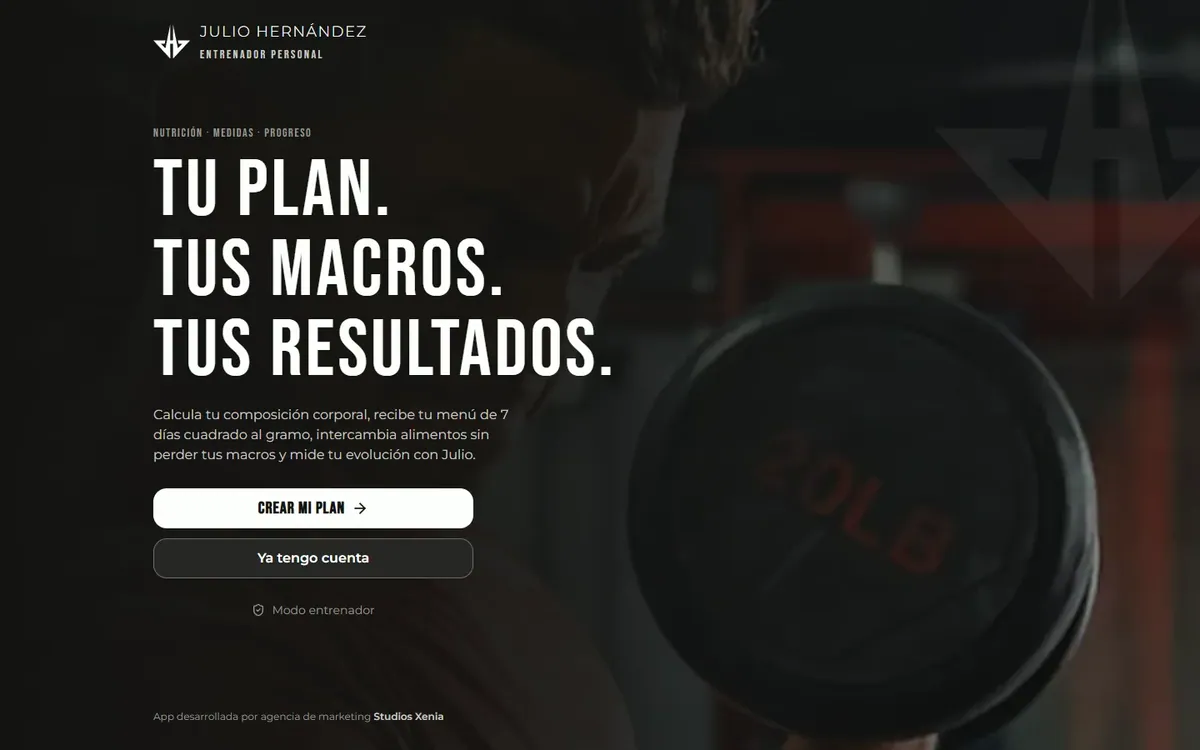
Installable apps. Julio Hernández's nutrition app installs from the browser, works without internet and syncs when it's back. Inside it's React and TypeScript on the phone, and a PHP and SQLite server for accounts, plans and sync.
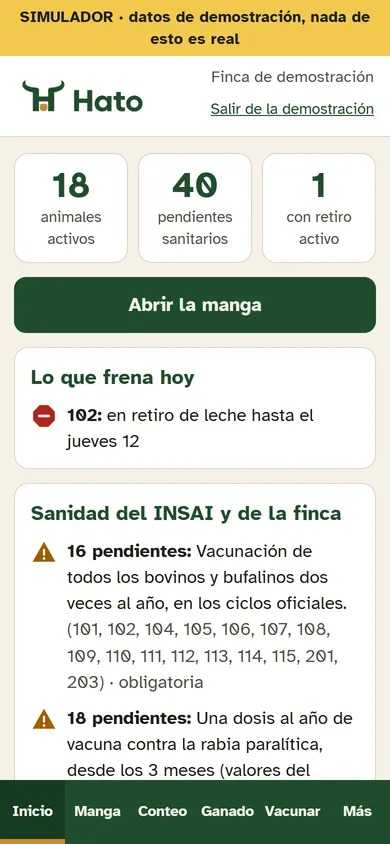
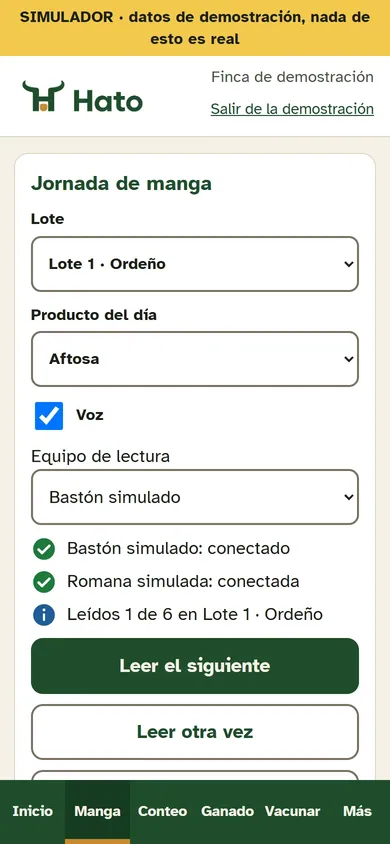
Field apps. Hato keeps everything in a local database on the phone, guides chute work and exports its documents as PDF and CSV. It's in development, and its case study says what's missing.
In-house engines. CryptoXenia, our quantitative engine, writes every movement to a ledger that cannot be rewritten unnoticed. The prospecting engine finds companies, checks their data and stops itself if bounces rise.
How we check it works
With automated tests you can count, and a second control: we plant defects in the code on purpose and require the tests to catch them. In CryptoXenia the latest published measure is 601/622 broken versions caught; in Hato, 252/252. A test that has never been seen failing proves nothing.
That rigour is what stops tomorrow's change from breaking what works today, and it applies just the same to a collections system, an operations dashboard or a WhatsApp agent.
The technology we use
The simplest one that solves the case. In apps, React and TypeScript; in engines and generators, Python; for data, SQLite or a local database on the phone; for flows between systems, n8n. This very website is an example: static pages, with no database to maintain.
Case studies that prove it
See all case studies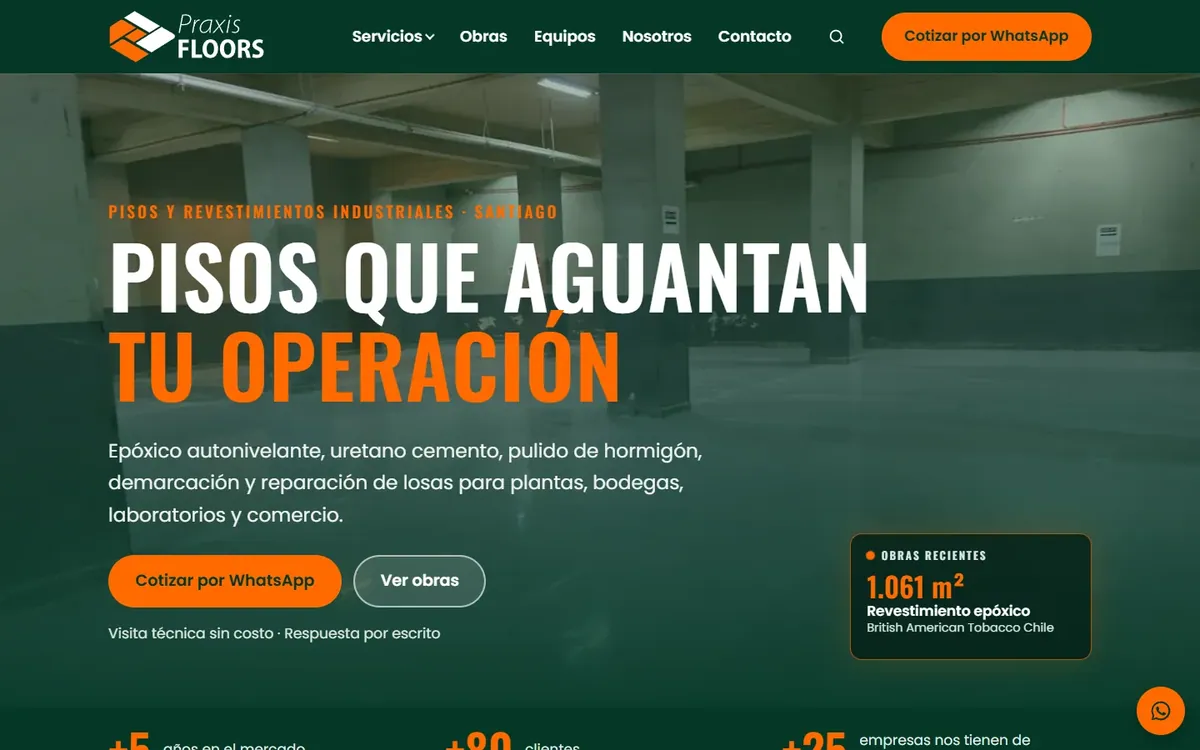 Client · liveInteractive demo
Praxis Floors: from a one-page site to a complete sales systemA 69-page site, Instagram, a private dashboard and prospecting.
 Client · liveInteractive demo
Julio Hernández: a nutrition app clients install on their phoneAn installable app with a plan, swaps and coach mode.
 In development · APK built, not yet field-testedInteractive demo
Hato: a livestock app that works with no signal on the plainsOffline, chute work with tag reading, health and SIGESAI.
 In-house project · demo account, no real moneyInteractive demo
CryptoXenia: a quantitative lab that won't trade without evidenceTamper-evident ledger, 24/5 shadow and 2,662 tests.
Try it yourself, nothing to install: from the operation to the flooring system, with the guide Praxis publishes (Praxis Floors) and the app's calorie and macro calculation, and an equivalent food swap (Julio Hernández) and a simulated day at the chute, animal by animal (Hato) and a chain that gives away any change (CryptoXenia).
Frequently asked questions
How much does custom software cost?
It's quoted by scope, in writing, before we start. The proposal includes the main screens drawn, the timeline and the price. Payment is 50% to start and 50% on delivery.
How long does a custom build take?
The timeline is set in the proposal, because it depends on scope. We deliver in modules, so you use the first part while the rest is built.
Can you start from the spreadsheets we already use?
Yes. We can start by reading the spreadsheets you already use and replace them piece by piece.
Do you build apps for iPhone and Android?
Yes. We build apps installed from the browser that work on both, without going through the stores. When something the web can't do is needed, such as reading devices over Bluetooth, we add an Android app: Hato has both.
How do I know the software won't break with every change?
Because every change runs against the automated test suite, and those tests are themselves tested with deliberately planted defects. We publish the numbers in each case study, with their date.
Do you work with companies outside Chile?
Yes. All work is remote, in English or Spanish, with prices in US dollars. We take on projects from Chile, the rest of Latin America, Spain and the United States.
Guides to help you decide
- How to tell if software is well built, without knowing how to codeWhat automated tests and planted defects are, and what to ask whoever builds your software.
- Custom software or SaaS: how to decide in six questionsSix questions to decide, and the middle path: off-the-shelf, connected.
- What to ask before hiring software development: a ten-point checklistTen points to get in writing before you sign, and how we answer them.
Related solutions
- PWA developmentApps installed from the browser that work offline and update themselves.
- AI automation for businessWhatsApp agents and workflows that answer, qualify, book and alert, with published prices.
- Software for industrial companiesPrivate dashboards and automatic follow-up for companies that quote, invoice and coordinate in the field.
We work remotely with companies in Mexico, Colombia, Spain, United states, Chile, Peru and Argentina.
Tell us what you sell and where it gets stuck.
We'll reply with what we'd do, what it costs and how long it takes.